Jakob Lorenz · 13 October 2026
Tracing the Evolution of Content Depth Tactics Among Standalone Digital Ventures
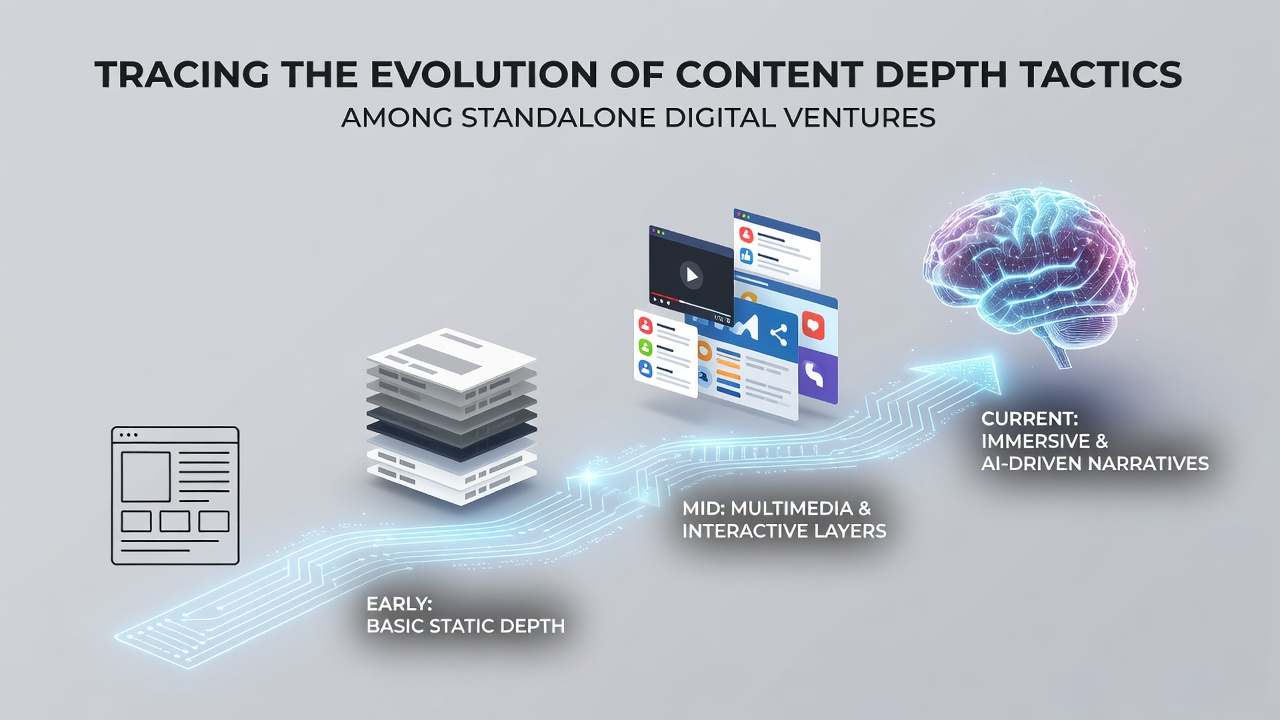
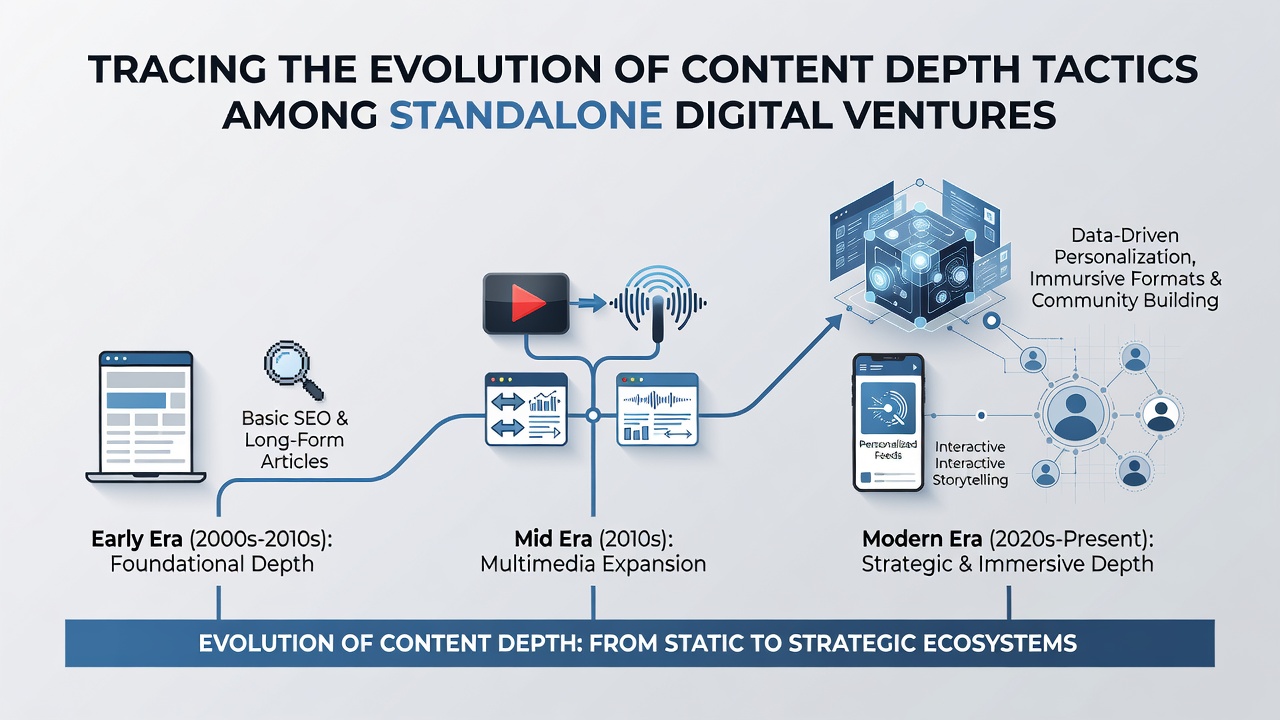
Standalone digital ventures emerged in the late 1990s as independent websites operated outside large corporate structures, and their approach to content depth has shifted through distinct phases driven by search engine changes, user behavior data, and platform algorithm updates. Early sites relied on short articles and basic HTML pages because bandwidth limits and dial-up connections restricted file sizes while search engines prioritized keyword density over comprehensive coverage.
Initial Shifts in the 2000s
By the mid-2000s, Google algorithm updates such as Panda placed greater emphasis on original material adn reduced duplicate content, which prompted operators of independent sites to expand individual pages into longer formats that addressed multiple related queries in a single document. Data from the U.S. Census Bureau on e-commerce adoption showed standalone ventures increasing average page word counts from under 500 in 2005 to over 1,200 by 2010 as traffic metrics improved with deeper topical coverage.
Those managing niche sites discovered that combining how-to sections with background explanations and resource lists kept visitors engaged longer, and session duration statistics collected by independent analytics platforms reflected this pattern across multiple verticals including technology reviews and hobbyist communities.
Expansion Through the 2010s
The 2010s brought mobile indexing and voice search growth, which required content structures that anticipated varied query types while maintaining narrative flow across desktop and smartphone displays. Standalone ventures began organizing material into hierarchical outlines with clear subheadings, bullet lists, and internal links that guided readers through complex subjects without forcing separate page loads. Research published by Pew Research Center documented rising consumption of long-form digital articles during this period, particularly among users aged 25 to 44 who accessed content via smartphones.
Operators adapted by incorporating data visualizations and embedded tables drawn from public datasets, which added layers of evidence without increasing bounce rates. European Commission digital economy reports from the same decade noted parallel trends among independent European sites, where content depth correlated with higher retention on pages covering regulatory topics and consumer guidance.
Contemporary Approaches After 2020
Following the widespread adoption of core web vitals metrics in 2021, standalone digital ventures refined depth tactics further by integrating multimedia elements directly into long articles rather than hosting them on separate pages. Video clips, audio summaries, and interactive calculators now appear within primary text blocks, allowing readers to explore supporting materials without leaving the main narrative. As of October 2026, traffic analysis tools indicate that sites maintaining these integrated formats sustain average engagement times above eight minutes across multiple device types.
Independent operators have also adopted modular content blocks that can be updated individually when new data emerges, which preserves overall page authority while keeping information current. Australian Bureau of Statistics publications on digital media usage highlight similar patterns among small Australian web properties, where frequent modular refreshes coincide with sustained referral traffic from search engines.
Measurement and Adaptation Patterns
Analytics platforms used by standalone ventures track scroll depth, time-on-page distributions, and secondary page navigation to evaluate which depth elements drive continued interaction. Those tracking these signals adjust heading structures, add clarification boxes, and expand reference sections based on aggregate user paths rather than individual assumptions. University studies on digital consumption, including work from Canadian institutions, have shown that pages exceeding 2,000 words with embedded data points achieve higher completion rates when headings match common search intent clusters.
Link placement within content has evolved alongside depth tactics, with external citations now concentrated in dedicated resource sections at article ends to avoid disrupting reading flow. This arrangement supports credibility signals while preserving primary narrative momentum across independent properties.
Conclusion
The progression from brief keyword-focused posts to integrated, data-supported long-form resources reflects ongoing responses by standalone digital ventures to algorithm priorities and user access patterns. Continued monitoring of engagement metrics and periodic structural refinements allow these independent operations to maintain relevance as search and consumption behaviors shift through 2026 and beyond.